
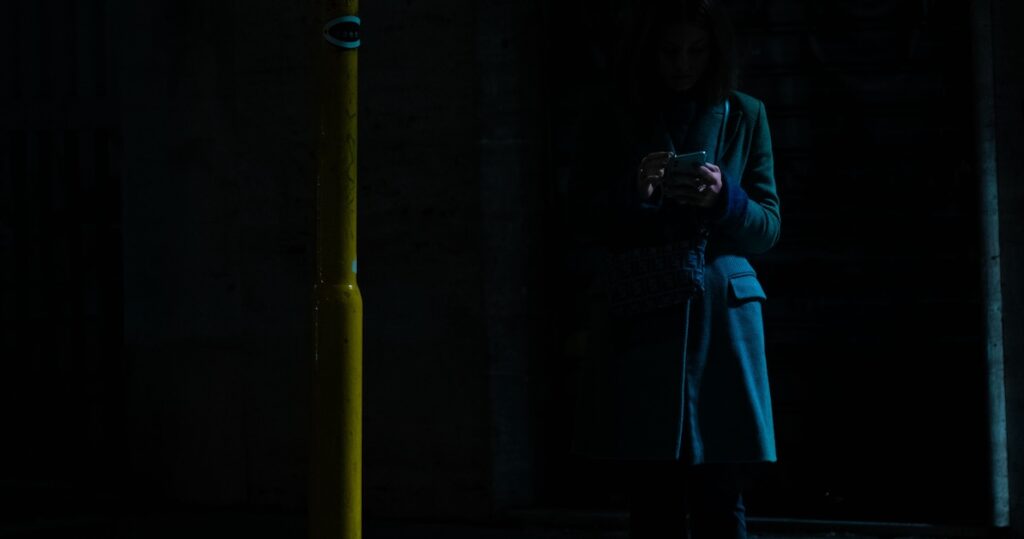
Stopping yourself from sending a text you’ll regret is hardest in the moment the urge is strongest — when it’s already typed, the pull feels necessary, and part of you knows you shouldn’t.
Why is it so hard to not send a text you’ll regret?
The urge to send a text you know you shouldn’t is an anxiety-driven impulse, not a decision — a behavioral response to relational uncertainty, the need to close silence, or the fear of what it means that they haven’t reached out. Research from Dialectical Behavior Therapy (DBT), developed by Dr. Marsha Linehan, shows these urges peak within 90 seconds and subside if you don’t act on them.
The text isn’t the point. The anxiety underneath it is. Sending it provides brief relief, which is exactly why the urge comes back.
This is the moment Paused was built for. Not the aftermath. Not the analysis. The 90 seconds before you hit send.
Why The Usual Advice Doesn’t Help
“Just don’t send it.”
This is not advice. It is the thing you are already trying to do.
“Delete their number.”
Deleting a number does not delete the urge. The pull to reach out is in the nervous system, not in the contact list. People who delete numbers know them by heart.
“Think about how you’ll feel after.”
In this moment, the anxiety is too strong for consequence-thinking to land. The part of you that knows how you’ll feel after is quieter right now than the part that needs to send the message.
“Wait until tomorrow to decide.”
This is actually close. But it doesn’t give you anything to do with the next 90 seconds.
What Is Actually Happening
The urge to send this text is a physiological event before it is a decision. The nervous system is responding to relational threat — uncertainty, distance, fear of what silence means — and driving toward a behavior that has previously provided relief.
Research on urge physiology from Dialectical Behavior Therapy (DBT), developed by Dr. Marsha Linehan, shows that urges are time-limited: they rise, peak within approximately 60 to 90 seconds, and then subside naturally if you do not act on them. The experience inside the urge is that it feels permanent and escalating. It is not.
What makes this moment hard is not the duration. It is that the urge is specifically designed to narrow your attention onto the action that will relieve it. Everything else goes slightly out of focus. The text feels necessary.
It is not necessary. It is an urge.
What To Do In The Next 90 Seconds
Put the phone face-down.
Not to avoid temptation. To introduce one small interruption between the urge and the action. The phone face-up is a continuous invitation to send.
Name what you are actually feeling.
Not “I need to send this text.”
One level down: what is the anxiety underneath it? I’m afraid they’re pulling away. I’m afraid I said the wrong thing earlier. I need to know where we stand. Naming the actual feeling — rather than the action the feeling is requesting — creates a small amount of distance.
Wait.
This is the intervention. You do not need to resolve the feeling. You do not need to distract yourself. You just need to not act for the next 60 to 90 seconds. The urge will begin to drop.
Use Paused.
Paused is a real-time awareness tool built for exactly this moment — the space between the urge and the send. It gives you something to hold onto while the urge peaks. Join the waitlist at usepaused.com/individuals.
Ask one question before you send.
If the urge is still there after 90 seconds: what do you actually want from sending this? Not the stated purpose of the text — the real one. If the honest answer is “I need to know they still care” or “I can’t handle the silence,” that is useful information. It tells you what is actually happening, and it might change what you decide to send — or whether you send anything at all.
Why Not Acting On The Urge Is The Whole Point
Each time you allow the urge to peak and fall without sending, you are weakening the loop slightly. The urge to reach out in relationship anxiety is maintained by acting on it — by getting the temporary relief of a response, or even of having sent the message. Not acting, repeatedly, over time, weakens the pull.
This is the mechanism behind Exposure and Response Prevention (ERP), an approach developed by Jonathan Abramowitz, the evidence-based approach for OCD-spectrum compulsive behaviors. It is also what urge surfing in Dialectical Behavior Therapy (DBT) is designed to support. The urge does not need to be eliminated. It needs to be allowed to peak and fall, over and over, until it becomes less frequent and less intense.
One 90-second pause will not fix the pattern. But it is the pattern being addressed, one moment at a time.
Frequently Asked Questions
Why do I keep wanting to text someone even when I know I shouldn't?
Because the urge is anxiety-driven, not information-driven. It is the nervous system seeking relief from relational uncertainty — not a signal that texting is actually the right move. The urge will return regardless of what you send, because the anxiety that produces it is not resolved by the text.
Does deleting someone's number stop the urge to text them?
Rarely on its own. The urge to reach out is a behavioral pattern driven by anxiety, not by access to the number. Reducing access can help reduce the ease of acting on the urge, but it does not address the underlying pattern.
How long does the urge to text someone last if you don't act on it?
Research on urge physiology from DBT suggests urges typically peak within 60 to 90 seconds and begin to subside. It will feel longer. But the peak is brief, and if you do not act on it, it will drop.
What does it mean if I keep wanting to text an ex?
It usually means the attachment system is still activated — the relationship is emotionally unresolved, whether or not it is logistically over. This is normal and common. The urge to reach out is not evidence that you should. It is evidence that the nervous system is still seeking closure that the other person cannot actually give you.
What is Paused and how does it help with texting urges?
Paused is a real-time urge awareness tool. It is designed for the exact moment the urge to text is active — before you act on it. It gives you a way to stay in the gap rather than sending. Join the waitlist at usepaused.com/individuals.
Is the urge to text someone related to anxious attachment?
Often yes. The compulsive pull to reach out — to close the uncertainty, to confirm the connection is still there — is characteristic of anxious attachment. It is not a character flaw. It is what the attachment system does when it perceives relational threat.
Sources
- Abramowitz, J. S., Deacon, B. J., & Whiteside, S. P. (2019). Exposure Therapy for Anxiety. Guilford Press.
- Linehan, M. M. (1993). Cognitive-Behavioral Treatment of Borderline Personality Disorder. Guilford Press.
- Mikulincer, M., & Shaver, P. R. (2017). Attachment in Adulthood: Structure, Dynamics, and Change. Guilford Press.
- Photo by Simeon Stoilov on Pexels