
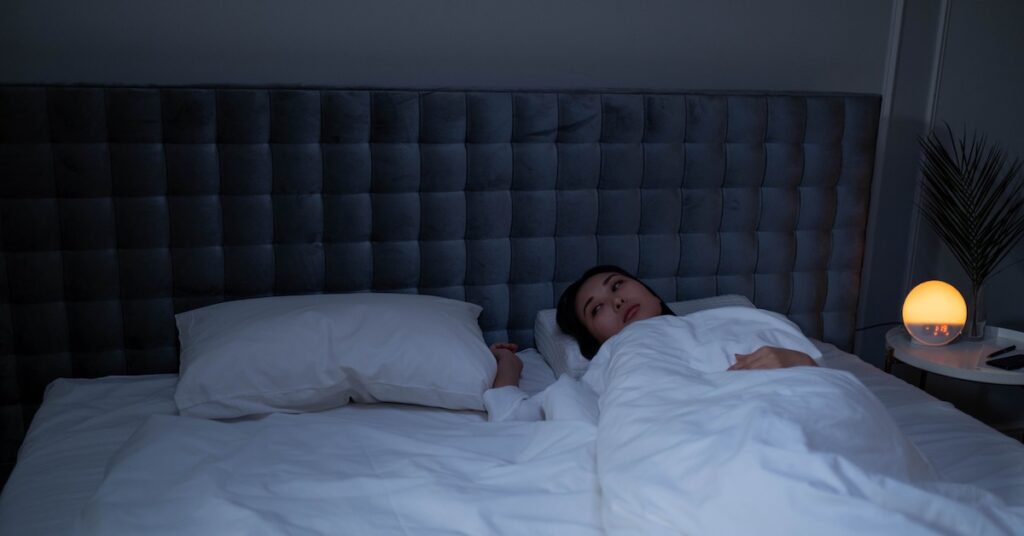
Relationship anxiety at night is harder — not because you are weaker in the evening, but because the conditions that allowed you to manage it during the day are gone.
What is relationship anxiety at night?
Relationship anxiety at night is the intensification of anxious thoughts, compulsive checking, and relational distress during evening and nighttime hours — a recognized pattern in anxious attachment research and Dialectical Behavior Therapy (DBT). It is driven by reduced cognitive load, declining cortisol, and behavioral conditions that make checking feel necessary. It peaks within a predictable window. And it can be interrupted.
You have been here before: the replaying starts, the phone is already in your hand, the silence feels louder than it did at 2pm. This is not a signal about your relationship. It is a signal about the hour.
Paused is a real-time awareness tool built for the moment relationship anxiety peaks, including the 90-second window at night between the urge to check and the action you will regret.
Why Relationship Anxiety Is Worse At Night
The cognitive load drops
During the day, your mind is occupied — work, tasks, conversations, logistics. This is not healing the anxiety; it is suppressing the signal. The moment the cognitive load lifts, the suppressed signal returns — often with accumulated intensity from a full day of being held down.
This is why anxiety about a relationship can feel manageable at 2pm and overwhelming at 10pm. The anxiety was present all day. The conditions to notice it were not.
Cortisol follows a diurnal rhythm
Cortisol, the stress hormone, peaks in the morning and falls through the day, reaching its lowest point in the early evening. Lower cortisol is associated with reduced capacity to regulate emotional responses. This is part of why emotional reactivity tends to be higher in the evening: the hormonal buffer is at its lowest.
Research by Jens Pruessner and colleagues on cortisol and stress reactivity confirms this pattern. For someone with anxious attachment — a pattern documented by Mikulincer and Shaver —where the stress response to relational cues is already heightened, evening cortisol patterns amplify what is already there.
The phone is in your hand and there is nothing else to do
The nighttime conditions for checking are ideal: you are in bed, you have no other task, the silence from them is more pronounced because there is nothing else filling the air. The urge to check — social media, messages, whether they have been online — is at its most accessible. And the checking that follows makes the anxiety worse, not better.
The replaying starts
Without other input, the mind returns to the last conversation, the last interaction, the thing they said, the thing you said, what it might mean. This is not processing. It is looping — the same material running without resolution, generating increasing anxiety with each pass.
Research on bedtime cognitive arousal by Harvey and colleagues shows that pre-sleep rumination is one of the strongest predictors of poor sleep and heightened nighttime distress. For anxious attachment, the content of the rumination is almost always relational.
What Does Not Help At Night
Checking one more time.
The check provides approximately 90 seconds of relief before the anxiety reasserts. You already know this. Checking at 11pm to see if they have been online, or to re-read the last exchange, feeds the loop — it does not close it.
Trying to think your way through it.
The replaying that feels like processing is the anxiety running. Thinking more carefully about the situation does not resolve it — it extends the loop.
Reaching out.
Sending a message at 11pm to check in, to say something low-stakes, to reopen contact — this is the anxiety seeking relief. Even if the message is benign, the pattern it reflects is one worth interrupting.
Scrolling anything else.
Screen exposure at night increases arousal, making both sleep and anxiety regulation harder. Replacing relationship-checking with general scrolling moves the checking to a different object without addressing what is driving it.
What Actually Helps At Night
Name the pattern as it starts
The moment you notice the pull to check or replay — before you act on it — name it: “This is the nighttime anxiety. This is how it starts.” You have been here before. Naming it as a familiar pattern, rather than as a signal about something real happening right now, creates small but meaningful distance.
Use the 90-second rule
Research on urge surfing from Dialectical Behavior Therapy (DBT), developed by Dr. Marsha Linehan, shows that urges peak within approximately 60 to 90 seconds and then subside if you do not act on them. The pull to check, replay, or reach out at night obeys this same structure. You do not need to stop the urge. You need to not act on it for 90 seconds.
Use Paused
Paused is a real-time awareness tool designed for the moment between the urge and the action. At night, when the urge to check peaks and the phone is already in your hand, Paused gives you something to hold onto for those 90 seconds. Join the waitlist at usepaused.com/individuals.
Set a specific phone boundary before you need it
Deciding at 9pm that you will not check after 10pm is more effective than trying to decide at 10:47pm while the urge is active. Behavioral commitments made outside the urge state are easier to keep than decisions made during it. This is not willpower; it is reducing the decision burden at the moment it is hardest.
Work with a therapist on the nighttime pattern specifically
The nighttime intensification of anxious attachment has specific behavioral and physiological drivers. ACT (Acceptance and Commitment Therapy) and sleep-focused cognitive behavioral approaches can address both the attachment anxiety and the nighttime amplification. Paused’s practitioner track provides between-session support: usepaused.com/practitioners.
Frequently Asked Questions
Why is relationship anxiety worse at night?
Several factors converge: cognitive load drops (removing daytime suppression of anxiety), cortisol reaches its daily low (reducing emotional regulation capacity), and behavioral conditions for checking are ideal (phone in hand, nothing else to focus on). The anxiety was present all day. The conditions to notice and feel it arrive in the evening.
Why do I replay conversations at night?
Without the cognitive demands of the day, the mind returns to unresolved material — which, in anxious attachment, is almost always relational. The replaying feels like processing but is actually looping: the same material without resolution, generating increasing anxiety. It does not resolve by thinking more. It subsides by not engaging it further.
What should I do when I want to check my phone at night?
Wait 90 seconds before acting. Name the urge as a urge, not as a signal about something real happening right now. Use Paused to help stay in that window. If you do check, notice how the relief lasts and how quickly the urge returns — this is useful information about the loop.
Does checking the phone at night make anxiety worse?
Yes, over time. Each check provides brief relief that strengthens the checking behavior. Screen light also increases physiological arousal, making both anxiety and sleep worse. The check feels like it will help. It tends to extend the loop.
Is nighttime relationship anxiety a sign of anxious attachment?
The pattern described — intensification of checking, replaying, and anxiety around the relationship at night — is closely associated with anxious attachment. It is not diagnostic, but it is a recognizable pattern that has a structure and responds to specific approaches.
What is Paused and does it help at night?
Paused is a real-time urge awareness tool — designed for the moment between the urge and the action. At night, when the urge to check or reach out peaks, Paused gives you something to hold onto for the 90 seconds before the urge drops. Join the waitlist at usepaused.com/individuals.
Sources
- Harvey, A. G. (2000). Pre-sleep cognitive activity: A comparison of sleep-onset insomniacs and good sleepers. British Journal of Clinical Psychology, 39(3), 275-286.
- Linehan, M. M. (1993). Cognitive-Behavioral Treatment of Borderline Personality Disorder. Guilford Press.
- Mikulincer, M., & Shaver, P. R. (2017). Attachment in Adulthood: Structure, Dynamics, and Change. Guilford Press.
- Photo by cottonbro studio on Pexels
- Pruessner, J. C., Wolf, O. T., Hellhammer, D. H., & Kirschbaum, C. (1997). Free cortisol levels after awakening. Life Sciences, 61(26), 2539-2549.